Tyre service on Öland
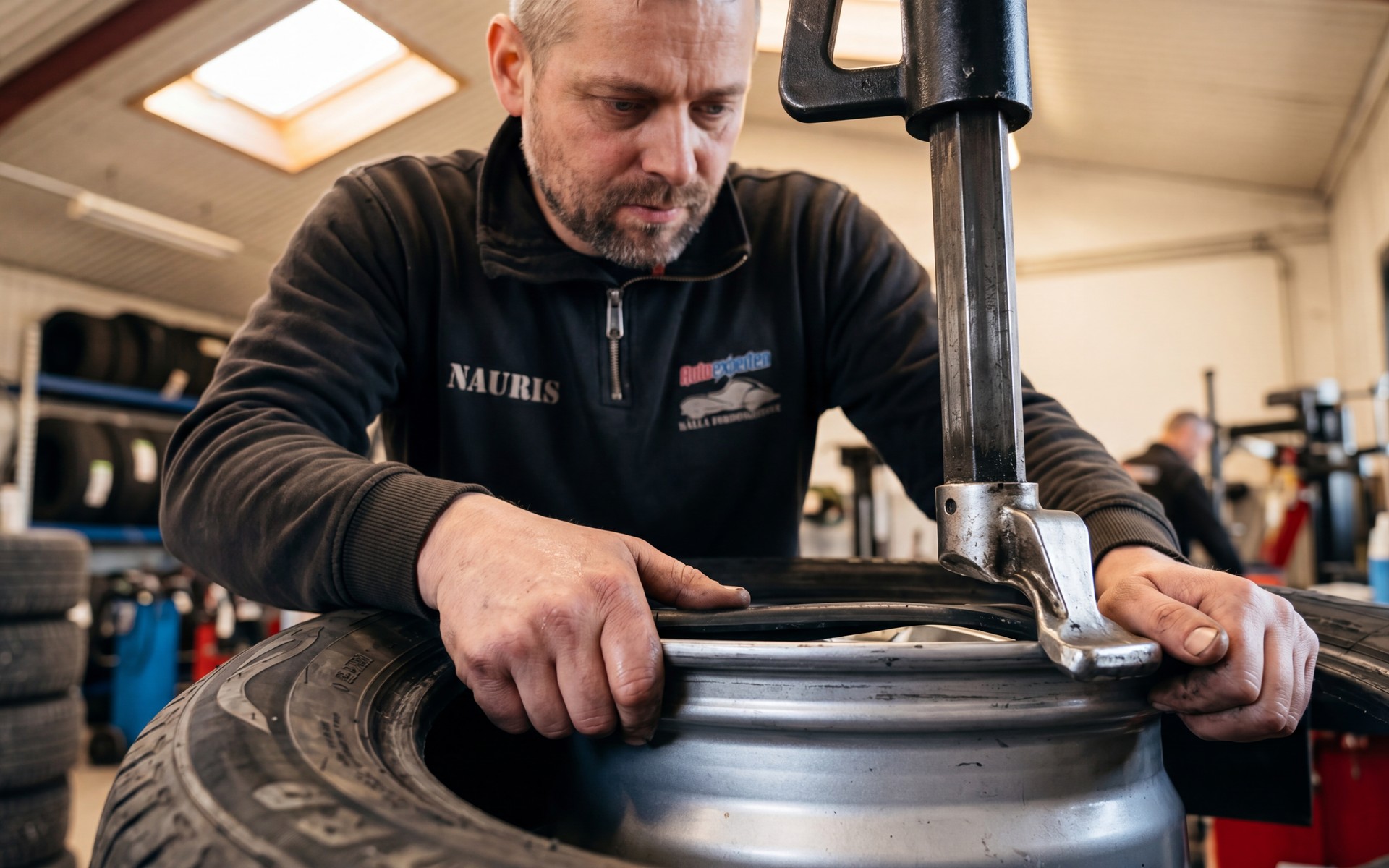
Tyre service for everything on wheels, with seasonal changes, balancing and the right tyres for the right load. From mopeds to buses, we keep you moving.
Car
A car on Öland swaps tyres twice a year — winter tyres are mandatory from 1 December to 31 March, and most run summers the rest of the year. The car is also usually the family's biggest daily expense, where unnecessary costs are best avoided.
Swapping tyres before 15 April (summer) and before 1 December (winter) avoids fines and unsafe driving — we book you in before the rush. We also run a tyre hotel, storing your out-of-season tyres dry and dark so they last longer than in the garage.
Read more about Car arrow_forwardEstate car
An estate often carries more weight than you think — full load, roof box, sometimes a trailer behind. That makes it different from an empty saloon in how the tyres wear and what they have to take.
The right load index matters more on an estate — an under-rated tyre can overheat and fail at full load on the autobahn. We read the vehicle's data plate and recommend tyres that cover your actual use, not just the minimum.
Read more about Estate car arrow_forwardSUV
An SUV weighs 500–800 kg more than the equivalent saloon, often on big 19–21-inch alloys with low-profile tyres. It looks tough, but it also means every hit against an Öland gravel-road edge can get expensive.
Low-profile SUV tyres are vulnerable to kerb strikes — sidewall bulges often show only when it's too late and the tyre has to be replaced whole. We check sidewalls carefully, fit tyre-pressure sensors (TPMS) correctly and keep the bigger sizes in stock.
Read more about SUV arrow_forwardVan
A van needs C-rated (commercial) tyres — a heavier-duty construction built for heavy loads and high mileage. Regular car tyres don't last when the van does 60,000 km a year fully loaded.
The wrong load index isn't only illegal — your insurance won't cover a crash if the tyres aren't rated for the load. We check against the data plate and recommend C-rated tyres with the correct index numbers — small cost, big difference.
Read more about Van arrow_forwardMotorhome
Motorhome tyres (CP-marked) are built for a vehicle that stands still 90% of the year but weighs 3–4 tonnes and covers long distances when it finally rolls. Quite a different load from normal car tyres.
Motorhome tyres age through UV and standing, not only mileage — after six years the sidewalls crack and the tyre can be dangerous even with plenty of tread. Check the DOT code (four digits = week and year) and replace if older than 6 years.
Read more about Motorhome arrow_forwardTractor
Tractor tyres are big, costly and work under heavy load — hydraulics, towing, heavy implements. A failed tractor tyre mid-harvest is a real stress point and can cost a full day's work.
Agricultural tyres come in specific patterns for field, road or mixed use — the wrong choice wears out in half the time. We have the gear for large tractor tyres and can also patch punctures in the field when your schedule is tight.
Read more about Tractor arrow_forwardTruck
Truck tyres are one of the biggest running costs — fuel, tyres, driver in that order. The right tyre on the right axle (steer, drive, trailer) can save thousands of kronor a month in fuel.
We fit with the correct torque (impact on wheel bolts can break them), balance heavy wheels and can handle twin tyres on the rear axle. An unbalanced truck wheel shows immediately — steering-wheel vibration at autobahn speed is the clear sign.
Read more about Truck arrow_forwardBus
A bus's tyres carry the weight of 40–50 passengers plus the vehicle's own mass — a single bad tyre can put the whole rig at risk. Running cost and safety go together; the right tyre also saves fuel.
Retreaded tyres are allowed on buses if they are M+S-marked and meet ECE R117 — much cheaper than new and safe from a quality supplier. We recommend new tyres up front and retreads on the rear to keep costs down without compromising safety.
Read more about Bus arrow_forwardMoped & scooter
A moped or scooter has small tyres that wear fast — hard riding, a lot of braking and often only one or two tyres on the vehicle. The teenage rider rarely changes them — it falls to the parents.
A damaged or worn moped tyre is directly dangerous — no ABS, no stability control, just rubber on tarmac. We fit the right size and pattern, balance and check pressure — simple but life-critical.
Read more about Moped & scooter arrow_forwardMotorcycle
Motorcycle tyres are the most important parts on the bike — the total contact patch with the road is only a few square centimetres. The right tyre for your riding style (sport, touring, adventure) makes a bigger difference than most realise.
Motorcycle tyres always need precise balancing — an imbalance at 60 km/h becomes a vibration at 160 km/h. We fit with the right rotation, balance with weights on the inside and check tread against the legal 1.6 mm minimum.
Read more about Motorcycle arrow_forwardTips & reminders
- schedule
Book before the rush
Book summer tyres in March, winter tyres in October. Week 14 and week 44 are chaos — few slots and you can wait two weeks.
- savings
Tyre hotel saves SEK 500
Storage with us keeps tyres cool, dark and flat — they last two seasons longer than in the garage. Saves you SEK 500 a season over the long run.
- check_circle
Check the DOT code
Tyres older than 6 years need replacing even with good tread — the rubber dries out and becomes unsafe. DOT code is on the sidewall: four digits = week and year.
- lightbulb
Rotate tyres at 10,000 km
Rotate front-to-rear every 10,000 km — wear evens out and you get about 20% more life from the same set.